

Restore with NZ Cherries and Magnesium
2026-04-22

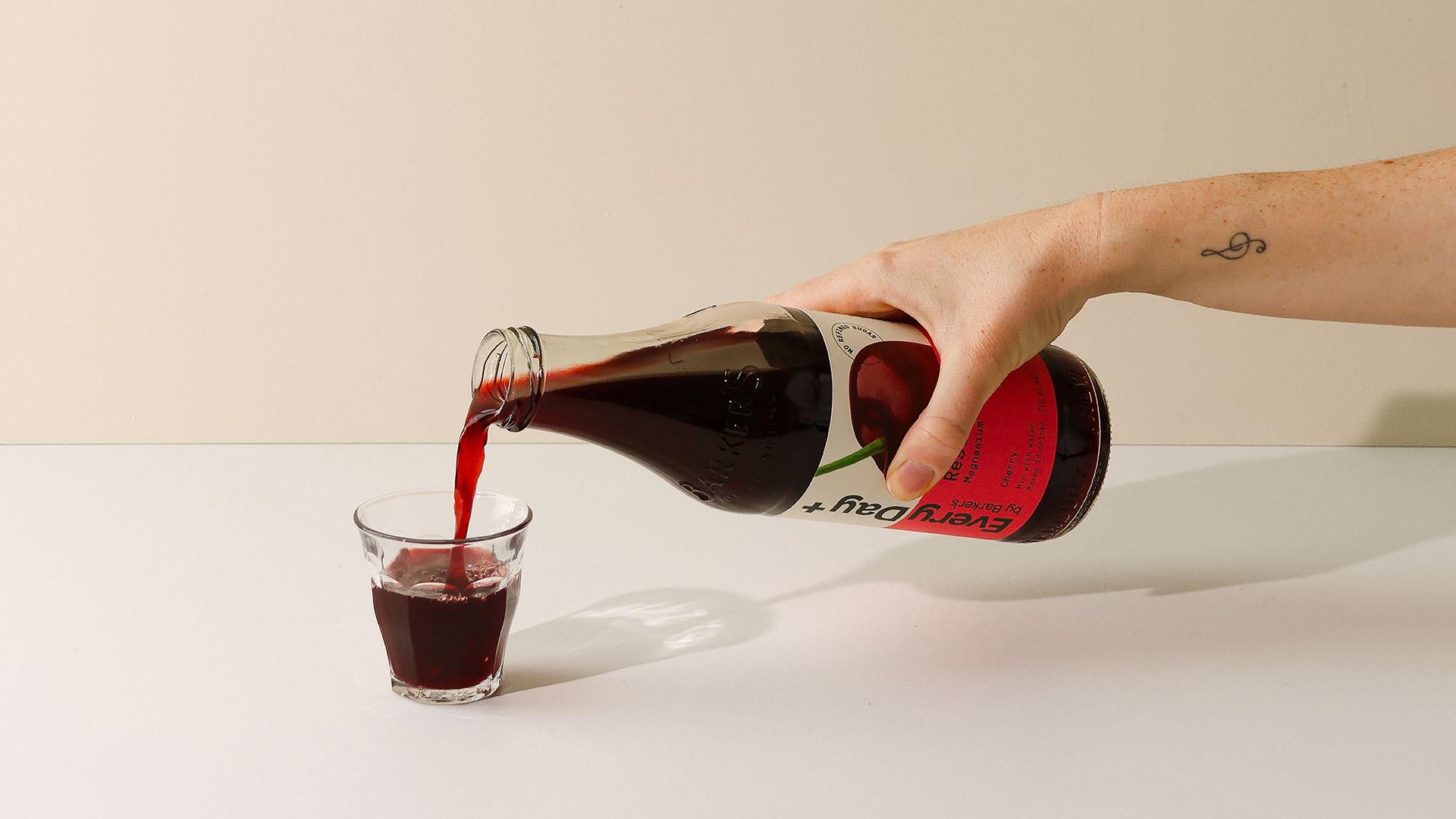
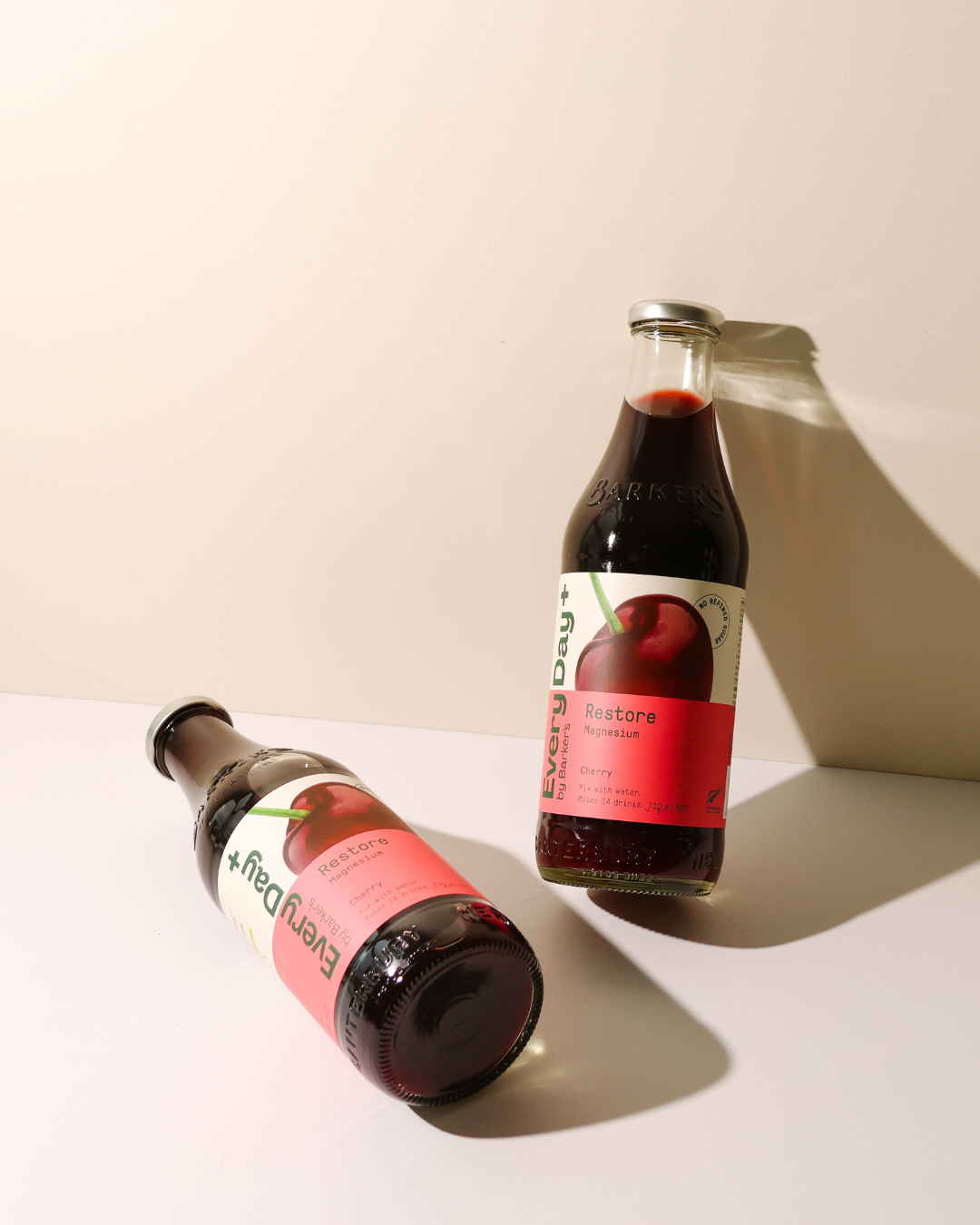
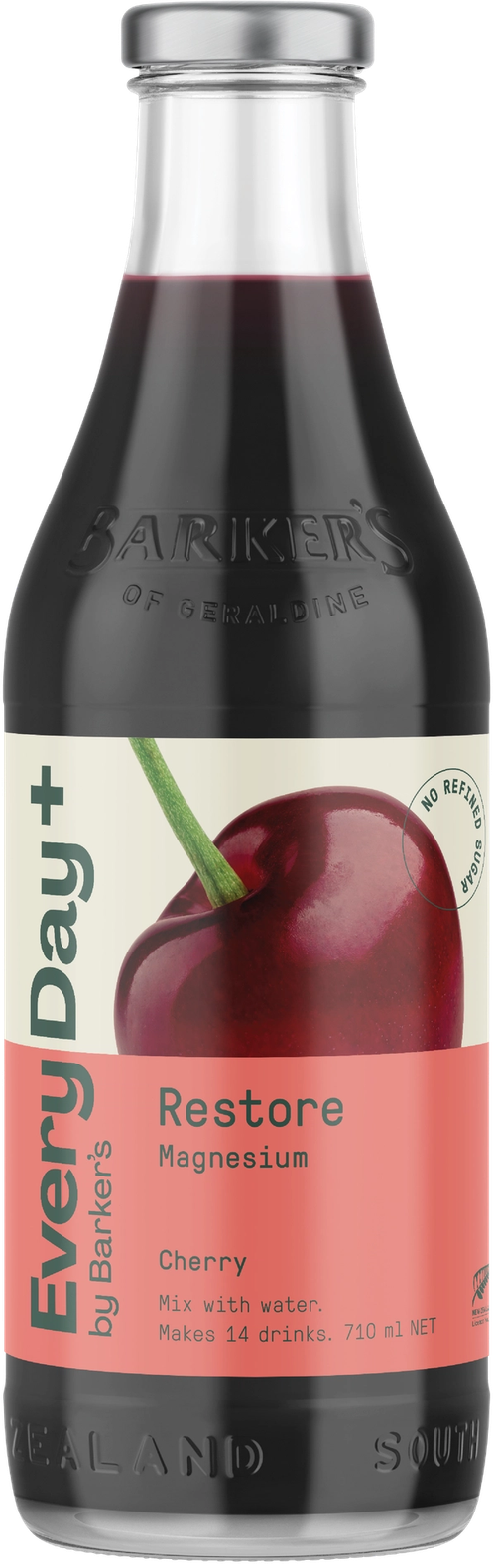
We’ve introduced Restore to the EveryDay+ range – a concentrate made from 98% New Zealand cherries (and 2% magnesium). Squeezed and bottled in Geraldine, South Canterbury, it’s packed full of rich cherries with added magnesium (80mg per serve), which helps reduce tiredness and fatigue. Each bottle makes 14 servings – simply add still or sparkling water or enjoy straight as a health shot.
We’ll dive into the science behind this restorative pairing, and why adding cherries and magnesium to your routine can be a game-changer.
What is Magnesium?
Magnesium is an essential mineral that your body needs to function normally (Mollo, 2020). It occurs naturally in many everyday foods, including cherries. To top up the natural magnesium in our 100% New Zealand cherries, we have added magnesium gluconate to Restore, which is highly absorbable and gentle on the stomach.
Magnesium plays an important role in overall health. According to Dr. Robert H. Schmerling (2025), it’s involved in more than 300 chemical reactions in the body, including protein production and the regulation of calcium, blood sugar and blood pressure. Magnesium is also essential for energy production, supports bone structure, and helps with the synthesis of DNA, RNA, and the antioxidant glutathione (Office of Dietary Supplements United States, 2026).
In Aotearoa New Zealand, magnesium intake hasn’t been widely measured since the 1997 National Nutrition Survey, which reported low intake levels - like those seen in other industrialised countries (Mollo, 2020). Building on this, a 2020 Otago University study found that 58.3% of 15-18 year old New Zealand school girls were consuming less than the Estimated Average Requirement for magnesium, meaning over half weren’t getting enough through their daily diets (Mollo, 2020).
Ponen (2022) from Healthify (Health Navigator Charitable Trust) recommends a daily intake of 420mg of magnesium for adult men and 320mg for adult women. Magnesium is found in foods like legumes, nuts, seeds, whole grains, green leafy vegetables, fortified cereals, and dairy products. If deficiency is a concern, only a blood or urine test can confirm it, and, in general, extra magnesium is considered safe as the body can dispose of excess amounts through urine.
A dynamic duo for daily restoration
Cherries are packed with their own beneficial nutrients making them an ideal match for magnesium. They’re naturally rich in antioxidants, polyphenols, and vitamin C, and help combat oxidative stress and support recovery (Cleveland Clinic, 2023).

Cherries for Antioxidants
Cherries are naturally rich in anthocyanins and polyphenols - powerful plant compounds that help protect cells from oxidative stress and inflammation. A 2022 analysis by the Riddet Institute at Massey University examined the nutritional and phytochemical profiles of six popular New Zealand cherry varieties and found that all contained beneficial minerals and plant compounds. The research showed that fresh cherries tended to have slightly higher levels of minerals such as potassium, calcium, and phosphorus, while processed cherries often contained higher concentrations of key phenolic compounds like neochlorogenic acid (Rashidinejad, 2023). The study also confirmed the presence of important antioxidant vitamins A and E, along with high levels of vitamin C. Overall, the findings highlight that both fresh and processed New Zealand cherries provide meaningful antioxidant support (Rashidinejad, 2023).
Cherries for Exercise Recovery
Cherries contain natural anti‑inflammatory compounds that have been studied for their ability to reduce muscle soreness and support recovery after exercise. According to McHugh (2022), cherry juice is now widely used in athletic recovery routines, with studies consistently showing enhanced recovery when using juice made from concentrate or fresh‑frozen cherries.
Research also suggests that consuming cherry juice in the days leading up to intense exercise may be especially beneficial. McHugh (2022) found that pre‑loading helped protect muscles, leading to less soreness and inflammation.
A 2010 study by Kuehl et al. examined long‑distance runners and found that while all participants experienced increased pain after a race, those who drank cherry juice reported a significantly smaller increase in muscle soreness. The study concluded that consuming tart cherry juice for seven days before and during a strenuous running event can help minimise post‑run muscle pain.
Cherries for Natural Sleep Support
Cherries are one of the few foods that naturally contain melatonin, the hormone that helps regulate healthy sleep–wake cycles (also known as your circadian rhythm) (Howatson et al., 2011). They also contain tryptophan, an amino acid used by the body to produce melatonin and serotonin, both important for sleep and mood balance (Cleveland Clinic, 2023).
While research is still evolving, early findings suggest that adding cherries to your diet may offer support for better sleep.
Summary
Magnesium supports hundreds of essential processes in the body, including energy production and the reduction of tiredness and fatigue. Combined with antioxidant rich New Zealand cherries, it creates a natural pairing that supports rest and recovery.
EveryDay+ Restore brings these benefits together in one simple daily ritual - an easy, delicious way to add more goodness to your day.
Please note, EveryDay+ products are intended to complement a healthy lifestyle and are not a substitute for medical treatments or supplements. While we provide general tips and information on our blog, we recommend consulting a healthcare professional for personalised advice. If you have been diagnosed with a magnesium deficiency, follow advice from your healthcare provider.
References
Cleveland Clinic. (2023, March 27). Benefits of cherries.
https://health.clevelandclinic.org/benefits-of-cherries
Cleveland Clinic. (2025, November 28). Do cherries help you sleep?
https://health.clevelandclinic.org/do-cherries-help-you-sleep
Harvard Health Publishing. (2025, June 3). What can magnesium do for you and how much do you need?
https://www.health.harvard.edu/blog/what-can-magnesium-do-for-you-and-how-much-do-you-need-202506033100
Howatson, G., Bell, P. G., Tallent, J., Middleton, B., McHugh, M. P., & Ellis, J. (2012). Effect of tart cherry juice (Prunus cerasus) on melatonin levels and enhanced sleep quality. European Journal of Nutrition, 51(8), 909–916.
https://doi.org/10.1007/s00394-011-0263-7
Massey University. (2023, March 28). New study puts the cherry on top for health benefits.
https://www.massey.ac.nz/about/news/new-study-puts-the-cherry-on-top-for-health-benefits/
Mollo, M. (2020). Magnesium intake and its main food sources in 15–18-year-old New Zealand schoolgirls (Master’s thesis, University of Otago). OUR Archive.
https://ourarchive.otago.ac.nz/esploro/outputs/graduate/Magnesium-Intake-and-Its-Main-Food/9926478778101891
National Center for Biotechnology Information. (2010, May 7). Article PMC2874510.
https://pmc.ncbi.nlm.nih.gov/articles/PMC2874510/
National Center for Biotechnology Information. (2022, February 14). Article PMC9306613.
https://pmc.ncbi.nlm.nih.gov/articles/PMC9306613/
Office of Dietary Supplements. (2026, January 6). Magnesium – Health professional fact sheet [Fact sheet]. U.S. National Institutes of Health.
https://ods.od.nih.gov/factsheets/Magnesium-HealthProfessional/
Ponen, S. (2022, December 8). Magnesium supplements. Healthify.
https://healthify.nz/medicines-a-z/m/magnesium-supplements
Rashidinejad, A., Ahmmed, F., Lister, C., & Stoklosinski, H. (2025). Functional potential of sweet cherry cultivars grown in New Zealand: Effects of processing on nutritional and bioactive properties. Foods, 14(21), 3749.
https://doi.org/10.3390/foods14213749
Featured Products


$12.99
710ml
Related Posts

American food manufacturer, McCormick has named Blackcurrant the flavour of the ...
Read more >
We’ve got some golden news to share! Our EveryDay+ Blackcurrant, Blueberry & Gin...
Read more >
We love blueberries at EveryDay+ and use them in a few of our products for their...
Read more >
Warmer days, shorter nights - summer is the season for spritzes, sunshine and so...
Read more >