

Prebiotics & Postbiotics for Gut Health
2025-12-01
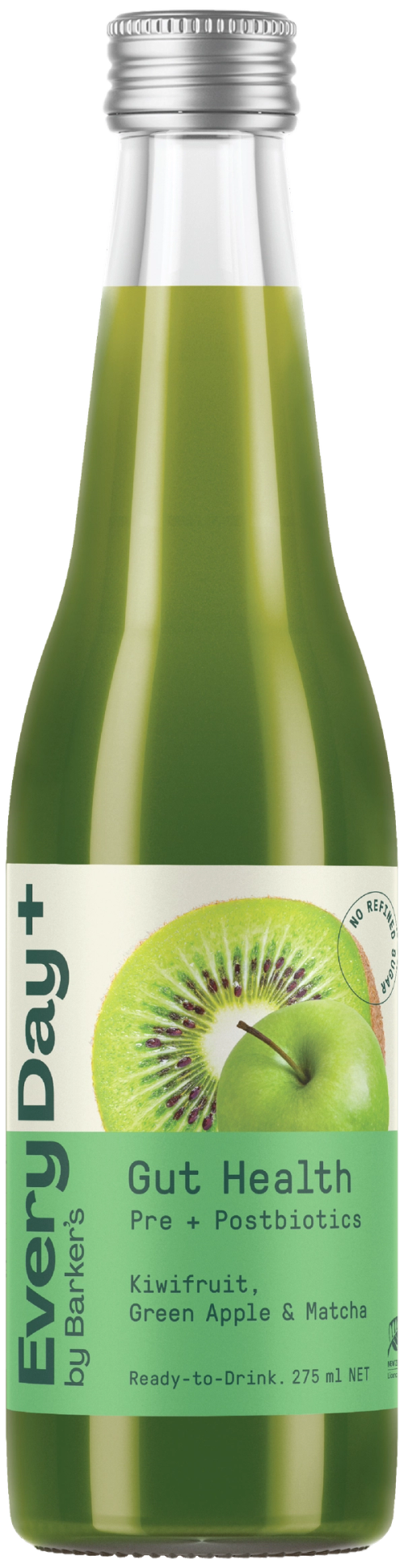
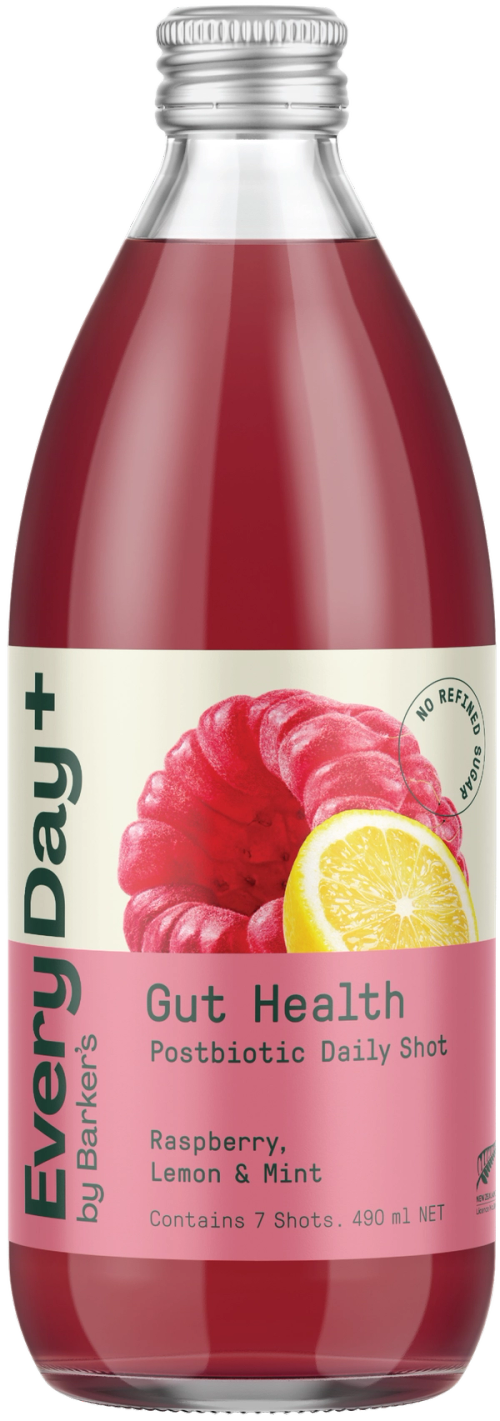
Introducing our two new products specially formulated for gut health – a Raspberry, Lemon & Mint Daily Shot and a Kiwifruit, Green Apple & Matcha RTD.
Why Gut Health matters
When we talk about the “gut”, we mean the digestive system – the part of the body that processes food. Inside it, especially in the large intestine, live trillions of tiny organisms, including over a thousand types of bacteria (Cleveland Clinic, 2023).
There are ten bacterial cells in your gut for every one of your human cells. Even more amazing, the genes from these bacteria outnumber your own genes by over 100 times (Bull & Plummer, 2014).
Your gut microbiome – the community of microbes in your gut - is unique to you. You inherit your first microbes during birth or breastfeeding, then continue to pick them up through diet and environment throughout your life (Cleveland Clinic, 2023). We live in harmony with these microbes. It might sound strange, but they’re essential to your health. They interact with your brain, nervous system, immune system, and hormone system (Cleveland Clinic, 2024).


Most of these microbes are helpful, but some can upset your gut balance and affect how you feel (Cleveland Clinic, 2023). An imbalanced gut microbiome, known as gut dysbiosis, can occur from antibiotic use, alcohol or smoking, poor diet or sleep, and stress (Cleveland Clinic, 2024).
Signs of an imbalanced gut include digestive problems (Cleveland Clinic, 2024), worsening of mental health conditions (Rogers et al., 2016), and skin issues such as eczema, psoriasis, or rosacea (Sánchez-Pellicer et al., 2024).
Boosting the Benefits of Fruit
We’ve added a special ingredient called Lactiplantibacillus plantarum to both our Gut Health Daily Shot and RTD. This is a type of postbiotic – which means it’s made from dead or inactive bacteria (or parts of them) that still offer health benefits (Salminen et al., 2021).
L. plantarum is used in food to improve flavour, boost antioxidant effects, fight off harmful bacteria, and preserve food. Eating foods with L. plantarum is linked to helping reduce gut infections, lower the risk of bowel diseases, and supporting your immune system (Zare et al., 2024).
In our new Kiwifruit, Green Apple & Matcha Gut Health RTD, we’ve paired postbiotic L. plantarum with a prebiotic called Acacia gum – giving you the benefits of both pre- and postbiotics in one convenient drink.
Acacia gum is a soluble dietary fibre found in acacia tree. It has long been used as a stabilising agent in food, but research has also highlighted its prebiotic benefits (Elnour et al., 2023).
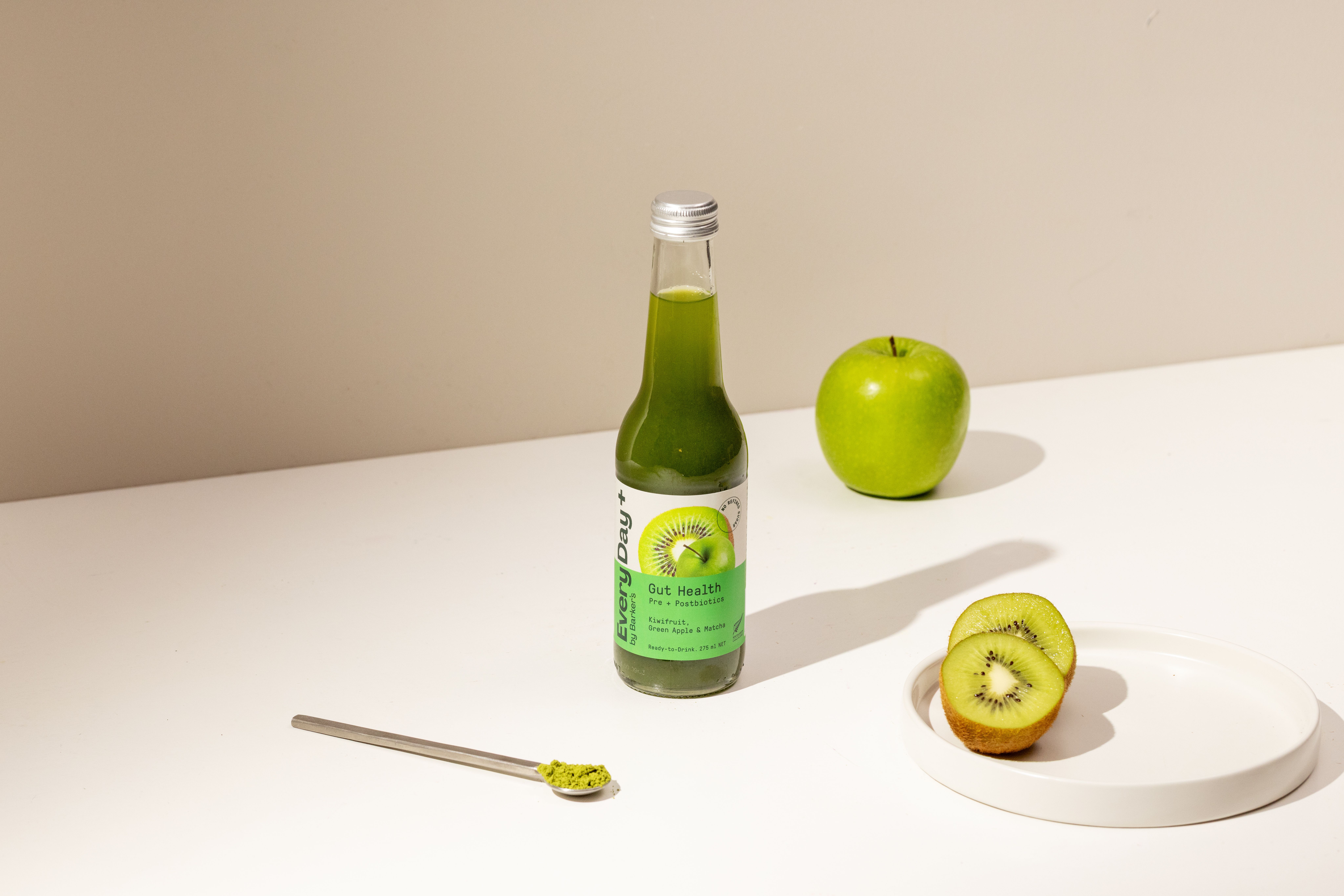
Prebiotics are like food for the good bacteria in your gut. They help these bacteria grow and stay active, which supports a healthy gut balance (Guts UK, 2025). Prebiotics are found in certain plant-based foods and aren’t fully digested by your body. Instead, they’re fermented by the good bacteria in your gut, producing substances that help reduce inflammation, strengthen the gut lining, and boost your immune system (Brown University Health Blog, 2022; Catanese, 2024).
In Summary
It’s incredible to think that inside your body lives a whole world of tiny organisms. These microbes help you digest food, fight off illness, and even influence your mood. When the balance of your gut microbiome is off, it can affect many parts of your health – but with the right support, you can help keep it in check.
Please note, treatment for gut dysbiosis depends on the cause. If it's due to a medical condition, that condition needs to be treated by a healthcare professional. EveryDay+ products are intended to complement a healthy lifestyle and are not a substitute for medical treatments or supplements. While we provide general tips and information on our blog, we recommend consulting a healthcare professional for personalised advice.
References
Brown University Health Blog Team. (2022, November 15). The importance of prebiotics. Brown University Health. https://www.brownhealth.org/be-well/importance-prebiotics
Bull, M. J., & Plummer, N. T. (2014). Part 1: The Human Gut Microbiome in Health and Disease. Integrative medicine (Encinitas, Calif.), 13(6), 17–22.
Catanese, L. (2024, May 15). Prebiotics: Understanding their role in gut health. Harvard Health Publishing. https://www.health.harvard.edu/nutrition/prebiotics-understanding-their-role-in-gut-health
Cleveland Clinic. (2023, August 18). Gut microbiome. Cleveland Clinic. https://my.clevelandclinic.org/health/body/25201-gut-microbiome
Cleveland Clinic. (2024, April 16). Dysbiosis. Cleveland Clinic. Retrieved September 17, 2025, from https://my.clevelandclinic.org/health/diseases/dysbiosis
Elnour, A. A. M., Abdurahman, N. H., Musa, K. H., & Rasheed, Z. (2023). Prebiotic potential of gum Arabic for gut health. International Journal of Health Sciences (Qassim), 17(6), 4–5. https://doi.org/10.53730/ijhs.v17n6.8453
Golen, T., & Ricciotti, H. (2021, November 1). What are postbiotics? Harvard Health Publishing. https://www.health.harvard.edu/nutrition/what-are-postbiotics
Guts UK. (2025). Prebiotics & probiotics. https://gutscharity.org.uk/advice-and-information/health-and-lifestyle/prebiotics-probiotics/
Ji, J., Jin, W., Liu, S. J., Jiao, Z., & Li, X. (2023, November 4). Probiotics, prebiotics, and postbiotics in health and disease. MedComm, 4(6), e420. https://doi.org/10.1002/mco2.420
Rogers, G. B., Keating, D. J., Young, R. L., Wong, M. L., Licinio, J., & Wesselingh, S. (2016). From gut dysbiosis to altered brain function and mental illness: mechanisms and pathways. Molecular psychiatry, 21(6), 738–748. https://doi.org/10.1038/mp.2016.50
Sánchez-Pellicer, P., Eguren-Michelena, C., García-Gavín, J., Llamas-Velasco, M., Navarro-Moratalla, L., Núñez-Delegido, E., Agüera-Santos, J., & Navarro-López, V. (2024). Rosacea, microbiome and probiotics: the gut-skin axis. Frontiers in microbiology, 14, 1323644. https://doi.org/10.3389/fmicb.2023.1323644
Salminen, S., Collado, M. C., Endo, A., Hill, C., Lebeer, S., Quigley, E. M. M., Sanders, M. E., Shamir, R., Swann, J. R., Szajewska, H., & Vinderola, G. (2021). The International Scientific Association of Probiotics and Prebiotics (ISAPP) consensus statement on the definition and scope of postbiotics. Nature reviews. Gastroenterology & hepatology, 18(9), 649–667. https://doi.org/10.1038/s41575-021-00440-6
Zare, D., Aryaee, H., Mirdamadi, S., & Shirkhan, F. (2024, October). The benefits and applications of Lactobacillus plantarum in food and health: A narrative review. Iranian Journal of Public Health, 53(10), 2201–2213. https://doi.org/10.18502/ijph.v53i10.16698
Featured Products


$27.99$34.99
8 x 275ml



$7.99$9.99
490ml
Related Posts

American food manufacturer, McCormick has named Blackcurrant the flavour of the ...
Read more >
We’ve introduced Restore to the EveryDay+ range – a concentrate made from 98% Ne...
Read more >
We’ve got some golden news to share! Our EveryDay+ Blackcurrant, Blueberry & Gin...
Read more >
We love blueberries at EveryDay+ and use them in a few of our products for their...
Read more >